Digital transformation
Axibra closes the infamous gap between strategy and execution, and carries a transformation through to delivery.
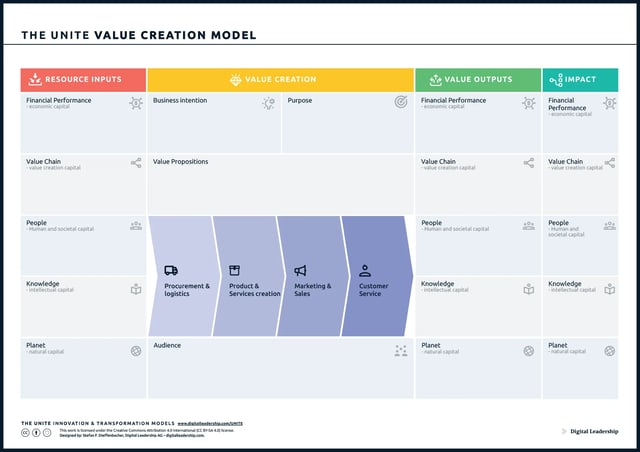
See how it worksThe UNITE value creation framework outlines how a company or organization generates value for its customers, stakeholders, and shareholders. It involves identifying the key activities, resources, and capabilities that contribute to creating value, as well as understanding the needs and preferences of the target audience.
The package
The case
Organizations leverage value creation models to understand and design how they (could) create value for customers, stakeholders, and shareholders. Working with a value creation framework increases the understanding of the key factors and levers in the value creation process. It can thus help gain new perspectives, develop strategies to increase differentiation, and ultimately create competitive advantage. A nicely defined value creation framework is an excellent way of communicating how you create value.
The mechanics
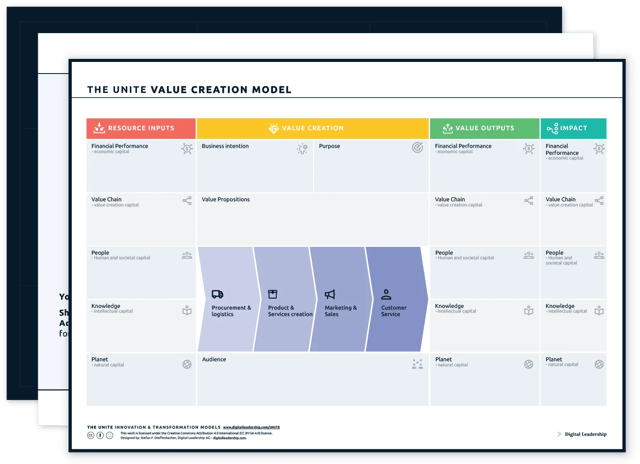
The UNITE value creation framework is nicely laid out in four different sections: Resource inputs summarize the different inputs your organization and society at large add into the value-creation process. Value creation defines the core process of how you create value, your value propositions, overarching business intention and purpose as well as your audience. Value outputs define the results you create. Impact takes it one step further: what is the larger impact you are creating on your organization and society? By understanding and ultimately optimizing the interplay among these key value-creation factors, organizations can improve how they create value for customers and generate profits. The value creation framework can be leveraged in various settings: from creating start-ups or new business models to corporate communication or board room communication, it is a highly valuable framework that can be used in numerous ways.
The purpose
What is the goal of the model?
Gain a complete perspective on your business. The goal of a value creation framework is to help develop a sustainable competitive advantage by creating unique and valuable offerings that meet the needs of customers more effectively and potentially sustainably than existing alternatives. This helps building a loyal customer base and generate profits for the company.
Beyond the download
The PDF is yours to keep. But a model changes something only when it touches the work — and that is what Axibra does with it. The model becomes the structure your decisions are made in, and every outcome stays traceable back to the input it came from.
In practice
For years we applied this model by hand, in client engagements. It now runs inside Axibra.
Axibra closes the infamous gap between strategy and execution, and carries a transformation through to delivery.
See how it worksThousands of organizations leverage the UNITE models — these are some of them …













By subject

From here on
Axibra is where these models run. It carries a decision through to the work that follows it, and keeps every result traceable back to the input it came from. If you would rather start with a conversation, we are one call away.
Strategy does not fail in the thinking. It fails in the handover.
Stefan F. DieffenbacherFounder & Managing Director of Digital Leadership